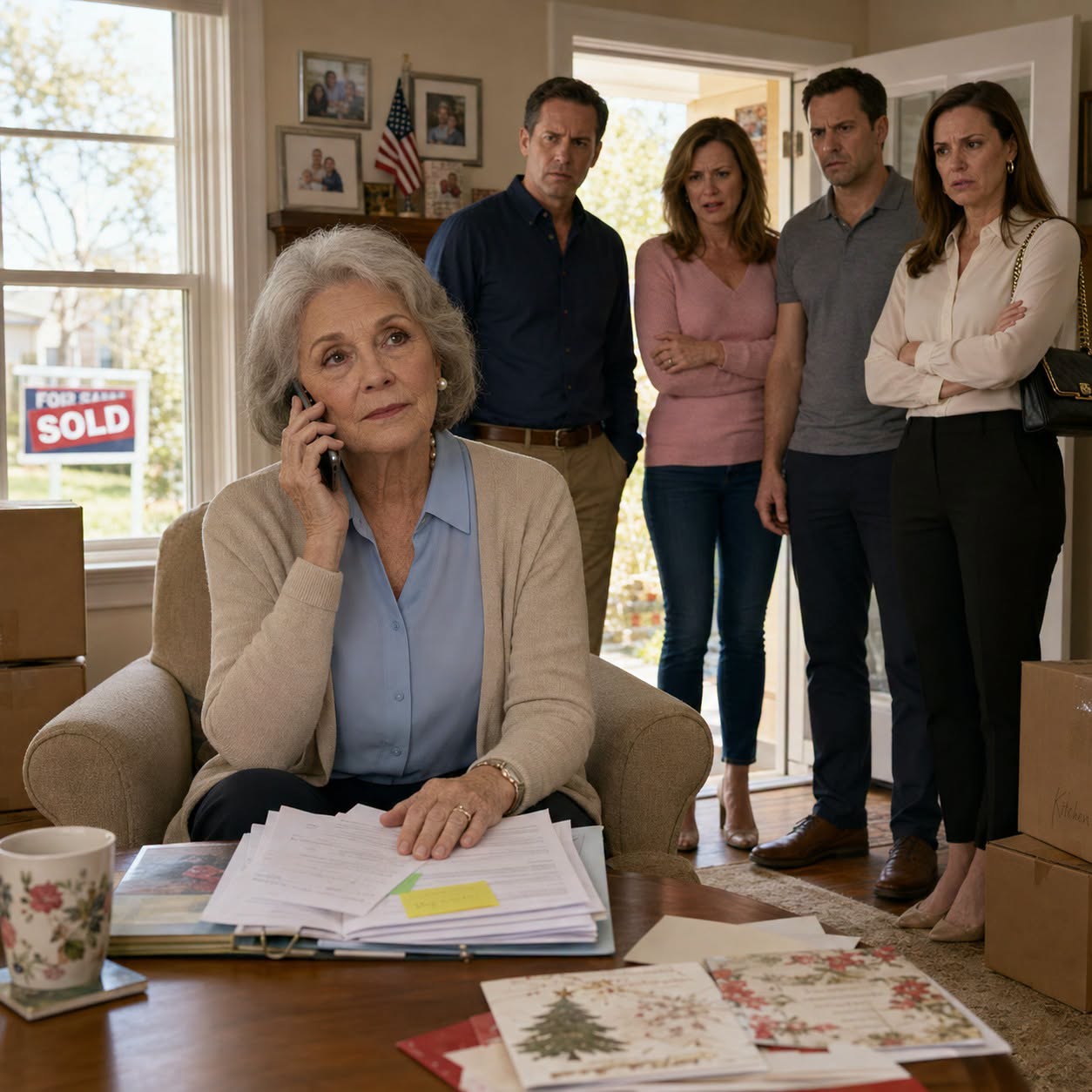
My mom gave me 48 hours to leave the house I had spent five years and more than $300,000 saving. “This house belongs to your sister now,” she said while Emily sat across from me with a smug little smile. I didn’t scream. I didn’t beg. I quietly packed a few boxes and made one phone call. Two days later
My mom yelled: “You have 48 hours to get your stuff out. That house is your sister’s now!” I didn’t argue—I just stayed silent and prepared. Two days later, when my sister walked in… she wished she had never stepped inside. I’m Rachel Morgan, 29, from Ohio. I remember that night clearly.
The kitchen light was too bright. It always felt harsh. We were at the dinner table. Mom, Dad, Emily, and me. I was cutting my chicken.
Then mom’s fork hit the plate. It was a sharp sound, like a crack. She looked at me. Her eyes were cold. You have 48 hours to pack, she said.
Her voice was flat. This house is Emily’s now. My fork stopped. I looked at Dad. He was looking at his plate.
Not at me. He just nodded. A small nod, but it was big for me. Emily was there, fresh from California. She had a smirk, a small one.
It said everything. She already acted like she owned the place. My place. The home I saved. The home I kept alive.
It was gone. Ripped away in one sentence. Just like that. Before I tell you how everything flipped, like and subscribe. Drop a comment.
Where are you watching from? The 48-hour deadline echoed in my head as I lay in bed that night, staring up at a ceiling I knew better than my own face. Every tiny crack and water stain told a story, a story of my sacrifice. This wasn’t just my home. It was a monument to my life’s work, to every dream I had deferred and every dollar I had saved.
My mother’s words, she needs it more than you, were a special kind of cruelty. Because they deliberately ignored the truth. Emily didn’t need this house. She just wanted it. I was the one who had kept it from crumbling into dust.
It started 5 years ago right after I got my nurse practitioner license. My dad, who had worked at the local auto plant for 30 years, got laid off. It wasn’t his fault. The whole factory shut down. But his pride, a stubborn and fragile thing, shattered into a million pieces.
He sat in his armchair day after day, the television flickering in front of his blank eyes, while the foreclosure notices started arriving in the mail. My mom, a part-time receptionist at a dental office, was frantic. Her small income barely covered the groceries. I was 24 years old, just starting my career with dreams of my own. I wanted to travel, maybe buy a small condo in the city, start a life that belonged to me, but I couldn’t watch them lose everything.
I couldn’t watch them lose the house my grandfather had built, the place where every single one of my memories lived. So, I moved back in. I told myself it was temporary. I told them it was temporary. Just until you get back on your feet, I’d said.
My dad had just grunted, not looking at me. My mom had hugged me, her relief so desperate it felt like she was drowning and I was her life raft. You’re such a good daughter, Rachel, she’d whispered. What would we ever do without you? At the time, I thought it was a compliment.
Now I realize it was a cage. The first check I wrote was for the mortgage. It cleared out almost my entire savings account. I remember the feeling of handing it to my mother. A mix of pride and a deep gnawing fear.
That was the beginning. Soon, it wasn’t just the mortgage. It was the utilities when the power company sent a shut off notice. It was the car repairs when the transmission on my dad’s old truck finally gave out. It was the groceries, the property taxes, the emergency root canal my mom needed.
My paycheck, which had once felt like a gateway to freedom, became nothing more than a bandage for my family’s endless financial wounds. In total, I had poured over $300,000 into this house and their lives. A sum so large I could barely comprehend it. It was a down payment on a future I was now being told I would never have.
While I was working double shifts at the clinic, sometimes sleeping for a few hours in the on call room because I was too exhausted to drive home, Emily was living her best life in California. She had gone to college on a student loan that I was now helping to pay off. Got a degree in communications and moved to the West Coast to find herself.
Her Instagram feed was a curated collection of beach sunsets, rooftop parties, and expensive brunches. She never asked if mom and dad were okay. She never asked if I was okay. She’d call on birthdays and Christmas, a brief, cheerful voice on the other end of the line, completely disconnected from the quiet desperation that had become our reality.
Oh, you’re still living at home. she’d asked once, a year into my servitude. There was a hint of pity in her voice, as if I were a failure. I could never do that. I need my space, my freedom.
I wanted to scream at her. I wanted to tell her that her freedom was being paid for by my imprisonment. I wanted to tell her that I was the one keeping the lights on in the house she so casually called home.
But I didn’t. I just bit my tongue and said, “It’s fine. I’m helping out. You’re such a saint, Ra,” she’d said with a laugh. And I knew she didn’t mean it.
To her, I wasn’t a saint. I was a doormat. The biggest sacrifices were the ones they never saw. Two winters ago, the old furnace finally died during the worst blizzard of the year. The temperature inside the house dropped to 40°.
My dad just pulled a blanket tighter around himself and stared at the TV. My mom cried. I spent the entire night on the phone, begging for an emergency repair man. When I finally found one, he quoted me a price that made my stomach drop. $6,000 for a new unit.
I didn’t have it. I had just paid the mortgage and a collections agency that was calling about my dad’s old credit card debt. So, I did the only thing I could. I took out a highinterest personal loan. The paperwork felt like signing my life away.
While the new furnace was being installed, warming the house that I was single-handedly saving, Emily posted a picture of herself on a ski trip in Lake Tahoe wearing a brand new designer ski jacket. The caption read, “Living my best life. Blessed.” I looked at that picture at her smiling, carefree face, and I felt a bitterness so profound it tasted like poison.
It wasn’t just money. It was my time, my energy, my youth. The garden out back had been my grandmother’s pride and joy. After she passed, my mom let it go to ruin. The roses grew wild and thorny, choked by weeds.
One spring, I decided to bring it back to life. I spent every weekend for 3 months pulling weeds, tilling the soil, pruning the bushes until my hands were raw and bleeding, even through thick gloves. When it was finally done, when the roses were blooming and the vegetable patch was thriving, my mom brought a friend over to see it.
“Isn’t it lovely?” she’d said, beaming. “I just have such a green thumb.” She never mentioned my name.
My sacrifices became expectations. My help was no longer a gift. It was my duty. They stopped saying thank you. They just took when the roof started leaking into the attic.
My dad just put a bucket under it. We’ll get to it, he’d said. Three months later, the bucket was still there and the water stain on the ceiling was growing. I was the one who called the roofers. I was the one who negotiated the price and I was the one who paid the $10,000 bill.
The final mortgage payment was the worst. I had been working towards that day for 5 years. I had imagined a celebration, a dinner, a moment of acknowledgement where my parents would look at me and finally, finally see what I had done for them.
I walked into the kitchen and handed my mom the receipt from the bank, the one that said, “Paid in full. It’s done,” I said, my voice thick with emotion. “The house is officially ours.”
She glanced at the paper, a flicker of something in her eyes. She put it on the counter.
“Oh,” she said. “That’s nice, dear. Can you pick up some milk on your way home from work tomorrow?”
That was it. No hug, no tears of joy. No, thank you, Rachel, for saving us. Just a request for milk.
My grand gesture, the culmination of 5 years of relentless work and sacrifice, was worth less than a carton of dairy.
It was in that moment that I understood I wasn’t their daughter. I was their utility. And now that the house was secure, my purpose was fulfilled. I had fixed the broken toy, and now it was time to give it to the favorite child.
The next morning, the sun streamed through my window, but it brought no warmth. The 48-hour clock was ticking, a relentless countdown to my own eviction. I felt hollowed out. A fragile shell of the person I was 2 days ago.
I walked downstairs, my feet heavy on the steps I knew so well. The smell of coffee was in the air. Emily and my mother were sitting at the kitchen table, chatting and laughing as if it were just another ordinary morning, as if they hadn’t detonated my entire life the night before.
My father was at the counter making toast, his back to me. He was a master of avoidance. I stood in the doorway, my arms crossed over my chest.
“I want to see the papers,” I said. My voice was surprisingly steady.
My mother stopped laughing and looked up at me, her face instantly hardening. “What papers?”
“The papers that say this house belongs to Emily,” I said, my eyes locked on hers. “I want to see them.”
Emily let out an exasperated sigh, rolling her eyes. “Oh my god, Rachel, are you still on this? It’s done. Move on.”
I’m not moving on until I see the proof, I insisted.
My mother stood up, her chair scraping against the lenolium floor. There is nothing for you to see. This is a private family matter.
I think it’s my matter when you’re kicking me out of my home. I shot back, my voice rising.
It was never your home, she snapped, her voice sharp and cruel. You were just living here. You were a guest.
A guest.
After everything I had done, after every dollar I had spent, I was just a guest. The word struck me with the force of a physical blow. I felt the air rush out of my lungs.
It was my father who finally broke. He couldn’t look at me, but he opened a drawer and pulled out a thick manila folder, sliding it onto the counter without a word. I walked over and picked it up. My hands were shaking so badly I could barely open the clasp.
Inside was a quick claim deed. It was dated a week ago. My parents, Richard and Ellen Morgan, had signed over the property to their daughter, Emily Morgan, for the grand sum of $1. It was all there in black and white, legal, official, a premeditated act of betrayal.
They had done this behind my back a week before she even arrived. Her surprise visit was all part of the plan. They had waited until she was here, a united front, to lower the axe.
But it was the reason my mother gave that truly gutted me. She has a family, Rachel, she said, her voice softening into a tone of false sympathy that was more insulting than her anger. She and her boyfriend Mark are thinking of moving back from California. They need a place to start their life to raise children. She needs stability. She needs this more than you.
Emily and Mark, a guy she had been dating for 6 months. That was the family that deserved this home. My dreams, the ones I had quietly held in my heart, didn’t matter. The dream of one day meeting someone, of getting married in the backyard under the old oak tree, of raising my own children in the rooms where I had grown up.
All of it was dismissed as irrelevant. I was single, so I didn’t count. My future was a blank page. They had no interest in reading.
I looked at my father, who was now staring intently into his coffee cup. “Dad,” I pleaded, my voice cracking. “How could you do this?”
After everything I did, I paid off the mortgage. This house would be gone if it wasn’t for me.
He finally looked up, his eyes filled with a weary shame, but his words were weak, dismissive. Stop being so dramatic, Rachel. It’s just a house.
Just a house.
That sentence broke the last thread of hope I was clinging to. It wasn’t just a house. It was my grandfather’s legacy. It was my safety net. It was the physical manifestation of 5 years of my life.
To him, it was just an asset to be shuffled around, a problem to be solved. And I was just a complication.
The memory of a promise he had made to me years ago came flooding back. I was a teenager sitting with him on the porch swing, upset about something I can’t even remember now. He had put his arm around me and said, “Don’t you worry, Ra. No matter what happens in the world, you’ll always have a home here. This house will always be yours.”
His words had been a comfort to me for years, a foundation I thought was solid. Now I saw that they were just empty words spoken in a moment of passing sentimentality with no real meaning behind them. His promises were as hollow as his character.
I felt a profound sense of loss that went far beyond the property itself. I wasn’t just losing walls and doors and a roof over my head. I was losing my family. I was losing the idea of my parents as people who loved me unconditionally. I was losing the last remnants of my childhood innocence.
The naive belief that if I was good and I did the right thing, I would be rewarded with love and security. I looked at the deed in my hands, at their signatures, and I finally understood.
They hadn’t just given my house to Emily. They had sold my love, my loyalty, and my sacrifice for the price of their own convenience. They had chosen the easy path, placating the demanding daughter by sacrificing the quiet, beautiful one. I wasn’t their child anymore. I was collateral damage.
That night, the house felt alien. The walls I had painted a warm, comforting shade of sage green now seemed to close in on me, cold and hostile. I sat on the edge of my bed, the one I’d had since I was 10, and listened to the sounds of the house settling.
Every creek of the floorboards, every groan of the pipes sounded like a goodbye. The 48 hour deadline was no longer a threat. It was a reality ticking down, each second pushing me closer to being homeless and utterly alone.
The tears finally came, not a gentle stream, but a gut-wrenching flood. It was a storm of grief for everything I was losing. I cried until my head pounded and my throat was raw until the sun began to peek through the curtains, casting long gray shadows across the room.
Sleep was impossible. Every time I closed my eyes, I saw their faces. My mother’s icy dismissal. My father’s pathetic avoidance. My sister’s cruel smirk.
I got up and began to walk through the house. A ghost in my own life. I ran my hand along the wallpaper in the hallway, a faded floral pattern my grandmother had picked out 50 years ago. I had argued with my mom to keep it when she wanted to tear it down, telling her it was part of the house’s history, part of its soul.
Now, Emily would probably cover it with some trendy sterile gray paint. In the living room, I stared at the fireplace.
“My grandfather had laid every single brick himself. He had taught me how to build a fire, his big, calloused hands guiding mine.”
“A fire keeps a home alive, Rachel,” he used to say. “It’s the heart.”
I thought of all the Christmases we had spent in front of it. The stockings hung on the mantle, the warmth seeping into our bones. The heart of the house was about to be ripped out, and so was mine.
I saw flashes of my life in every corner. There was the notch on the kitchen doorframe where my dad had marked my height each year, the highest mark just an inch shorter than his.
There was the window seat in the den that my grandfather had built for me when I was a little girl because I love to read. I used to curl up there for hours, lost in other worlds, feeling completely safe. Now there was no safe place left.
I went into the backyard. The roses I had worked so hard to save were in full bloom, their petals heavy with morning dew. I had poured my sweat and love into this soil. I had talked to these plants, coaxed them back to health.
My mom had always loved showing them off, but she had never once helped me prune or water them. They were my work, but she claimed their beauty. It was a perfect metaphor for our entire relationship. I did the hard work and she and Emily reaped the rewards.
The emotional pain was so immense it became physical. My chest achd with a deep constant pressure as if someone were standing on it. I couldn’t eat. The thought of food made me sick. I felt like a tenant in my own skin, a stranger in the home that held the entirety of my past.
I was being erased. My years of sacrifice, my financial contributions, my love, it was all being wiped away as if it had never existed.
I packed a few things in a cardboard box, my hands moving automatically, a few books, a framed photo of me and my grandparents, the worn teddy bear I’d had since I was a baby. Each item was a piece of a life that no longer felt real.
I felt a desperate, overwhelming urge to just leave, to pack a bag, get in my car, and drive away without looking back. To let them have the house, to let them win. The fight felt too big, too exhausting.
Maybe they were right. Maybe it was just a house.
But as I sat on the floor, surrounded by the ghosts of my past, another memory surfaced, pushing through the fog of despair. It was the last conversation I ever had with my grandfather. He was frail, sitting in his favorite armchair, the one that now sat empty in the corner of the living room.
I was home from college for the weekend, stressed about exams and my future. He had taken my hand, his grip surprisingly strong. He looked me right in the eye, his gaze clear and certain.
Rachel, he’d said, his voice raspy but firm. This world can be a hard place.
People will disappoint you, but I want you to remember something. This house has roots. Your roots. No matter where you go or what you do, this house will always be yours.
At the time, I thought he was being sentimental, speaking metaphorically about family and belonging. But now, his words echoed in my mind with a new urgent meaning.
This house will always be yours.
He hadn’t said our house or the family’s house. He had said yours. He had looked at me with such intention, such purpose.
Why?
A tiny spark flickered in the darkness of my grief. It wasn’t hope, not yet. It was something else, a question. A seed of doubt about the story my parents had told me.
They had said they inherited the house from him. They had let me believe that for years. But what if that wasn’t the whole truth?
My grandfather was a deliberate man. He didn’t say things he didn’t mean. His words were the one solid thing I could cling to in this whirlwind of betrayal. They were a lifeline.
I picked up my phone, my fingers trembling. The thought of fighting back still seemed impossible, but the thought of letting his memory be betrayed along with my own was unbearable. I scrolled through my contacts until I found the name I was looking for.
Hannah, my oldest friend, and thankfully a lawyer.
I pressed the call button, my grandfather’s final words ringing in my ears. Maybe it wasn’t over yet.
Hannah picked up on the second ring. Ra, what’s up? You sound awful.
Just hearing her voice so steady and normal made me break down all over again. I told her everything. The story spilling out of me in a torrent of sobs and jagged sentences. The dinner, the 48 hour deadline, the quit claim deed, the things my mother and father had said.
I told her about the furnace, the roof, the mortgage, the $300,000 I had poured into a house that was being stolen from me. She listened patiently, not interrupting once. On the other end of the line, there was only a quiet, simmering anger.
When I finally finished, my voice a raw whisper, there was a long pause.
“Hannah, are you there?” I asked, my heart sinking.
I was afraid she would tell me there was nothing I could do. That the deed was signed and it was all over.
“I’m here,” she said, her voice dangerously calm.
“I’m just trying to decide which of your parents I want to dismember first.”
A small, watery laugh escaped my lips. It was the first time I had felt even a flicker of humor in 2 days.
“Okay, don’t panic,” she said, her tone shifting into full lawyer mode. “They are banking on you being too heartbroken to fight back. They’re counting on you to roll over and accept this. We are not going to let that happen.”
“Now tell me something. When your grandfather passed away, did you ever see his will?”
The question caught me off guard. “No,” I said slowly, trying to remember. “I was in college. My parents handled everything. They just told me he left the house to them. I never thought to question it. Why would I?”
Because people lie, Rachel, she said bluntly. Especially when there’s money or property involved. Your parents let you believe you were paying off their debt on their house. But what if you weren’t? What if they weren’t the legal owners to begin with?
My grandfather’s words flashed in my mind again. This house will always be yours.
Could he have meant it literally? The idea seemed insane, a desperate fantasy. My parents wouldn’t lie about something that monumental, would they?
The coldness in my mother’s eyes, the shame on my father’s face. Suddenly, it didn’t seem so impossible. They were capable of a cruelty I had never imagined. What if they were capable of a deception just as vast?
Hannah, what are you saying? I whispered.
I’m saying we need to see that will, the original filed with the county, not the version your parents told you about, she said. Everything hinges on what that document says. I’m heading to the county clerk’s office first thing in the morning.
Don’t pack another box. Don’t speak to your family. Just sit tight and wait for my call.
Hanging up the phone, I felt a strange sense of calm settle over me. The path forward was still terrifyingly unclear. But for the first time, there was a path.
I wasn’t just a victim anymore. I was a person waiting for a piece of information that could change everything.
The next 24 hours were the longest of my life. I stayed in my room avoiding my family. I could hear them downstairs. Emily on the phone, excitedly describing her new house to her boyfriend. My mother humming as she cooked.
They were already moving on, building a new life on the rubble of mine. The smell of my mother’s cooking no longer brought me comfort. It smelled like betrayal.
Finally, in the late afternoon, my phone rang. It was Hannah. I answered with a hand that was slick with sweat.
“Okay,” she said, and her voice was different. It was tight, furious. “You need to sit down, Rachel. Are you sitting down?”
Yes, I said sinking onto the edge of my bed. Just tell me.
I have a certified copy of your grandfather’s last will and testament in my hands, she said. It’s very simple, very clear. He leaves a few small monetary gifts to your parents and some cousins.
But the house, Rachel, the house and the property, all of it he left to you.
The world tilted on its axis. I gripped the phone, my knuckles turning white.
What? To to me?
To his granddaughter, Rachel Morgan. Solely and exclusively. The will was filed and probated 10 years ago. You’ve been the legal owner of that house since you were 19 years old.
I couldn’t breathe. My mind was reeling, trying to process the enormity of what she was saying.
The legal owner?
For 10 years, Hannah continued, her voice like steel. They never told you. They hid the will from you. They let you live here thinking you were a dependent when you were the owner.
They let you pour your life savings into paying off a mortgage that was legally your responsibility, but they framed it as you helping them. They weren’t just being cruel, Rachel. They were committing fraud, and their attempt to transfer the deed to Emily. It’s completely illegal.
They can’t give away something they never owned.
The full weight of their deception crashed down on me. This wasn’t a recent betrayal. This was a lie a decade in the making.
Every thank you they had ever given me was a lie. Every time they had acted like they were doing me a favor by letting me live here was a lie. They had watched me work myself to the bone.
Sacrificing my youth and my future to save a house that was already mine. They hadn’t just accepted my help. They had orchestrated the entire situation to their advantage.
They had used my love and my sense of duty as a weapon against me. All while secretly planning to hand my inheritance over to my sister.
The grief I had been feeling was suddenly burned away by a cold, clarifying rage. My tears dried up. My hands stopped shaking.
The heartbroken girl who had been crying on her bedroom floor was gone. In her place was the rightful owner of this house, and she was done being a victim.
Hannah, I said, my voice low and steady. What do we do now?
I heard her smile on the other end of the line.
Now, she said, we fight back.
The rage I felt after Hannah’s phone call was a clean, purifying fire. It burned away the years of misplaced guilt, the sense of obligation, and the desperate need for their approval.
For the first time in my life, I wasn’t thinking about what they wanted or what they needed. I was thinking about justice. My justice.
Hannah’s advice was simple. Don’t say a word to them. They showed you their plan. Now you execute yours in silence.
Silence became my weapon. While my family moved around me, blissfully unaware of the truth bomb that was about to detonate their lives, I began to work.
The 48 hour deadline they had given me was a gift. It provided the perfect cover for my own preparations. They thought I was packing to leave. In reality, I was building my case and reclaiming my life piece by piece.
My first stop was the attic. In a dusty corner, under a pile of old blankets was a stack of my grandfather’s old file boxes. Inside, I found what I was looking for.
A copy of his will tucked into a folder labeled personal. It was exactly as Hannah had described. The language was simple and direct, just like him.
To my beloved granddaughter, Rachel Morgan, I leave my house and all property contained therein, with the hope that she will make it a place of happiness and shelter for all of her days.
Reading the words in his own handwriting, I felt a profound connection to him, a sense of validation that washed over me. He had seen me. He had chosen me.
My parents hadn’t just betrayed me. They had betrayed his final wish.
Next, I began the painstaking process of gathering evidence. I spent hours in my room, hunched over my laptop, digging through a decade of my financial life. I printed out every bank statement, every credit card bill, every email confirmation.
I made a thick, heavy pile of receipts, a paper trail of my servitude. There it was. The $10,000 wire transfer to the roofing company, the recurring monthly payments to the bank, chipping away at the mortgage until it was gone, the $6,000 charge for the new furnace, the receipts from the home improvement store for paint, for plumbing supplies, for the new water heater.
I even found the bill of sale for the living room furniture, the dining room set, the washer and dryer, the stainless steel refrigerator my mother had just had to have. I had paid for all of it. Every last stick of furniture, every appliance.
As I compiled the documents, a timeline of their deception became painfully clear. I noticed that the big expenses often coincided with cheerful newsy emails from Emily.
The month I paid for the new roof, Emily had emailed about losing her part-time job and needing a little help with rent. My parents had told me they were strapped for cash, so I had stepped in to cover the house repairs.
Now I saw it for what it was. The money I gave them for the house had likely been sent directly to California to fund my sister’s irresponsible lifestyle. They had been using me as their personal ATM to prop up the golden child.
All while I lived under the illusion that I was saving the family home. My home.
The binder I put together was 3 in thick. It was a meticulous record of my sacrifice. Undeniable and cold. It wasn’t just about the money. Each receipt represented a choice I had made.
To stay home instead of going out with friends, to work a double shift instead of taking a vacation, to put their needs before my own. This binder was the story of my 20s. And it was a tragedy.
With the evidence secure, I made the next call.
Hello, is this A to B movers? I asked, my voice steady. I’d like to schedule a job for tomorrow morning.
I explained the situation carefully. I had a detailed itemized list of belongings that needed to be moved out of the house and put into a storage unit. I stressed that the crew needed to be discreet and professional. I didn’t want a scene. I just wanted my things.
The final step was the legal filing. I met Hannah at her office, the binder of evidence sitting between us on the conference table. She looked through it, her expression growing grimmer with each page.
This is overwhelming RA, she said, shaking her head. This isn’t just a slam dunk. This is a public shaming.
She drafted the petition to enforce the will and formally contest the fraudulent property transfer. It was a powerful document laying out the facts in cold legal language. It named my parents Richard and Ellen Morgan and my sister Emily Morgan as defendants.
The petition would be filed first thing in the morning and a process server would deliver the summons.
“Are you sure you’re ready for this?” Hannah asked gently, her hand on my arm. “Once we file this, there’s no going back. This will tear your family apart.”
I looked at her, my resolve like iron.
They tore this family apart when they lied about my grandfather’s will. They tore it apart when they decided their daughter was a resource to be exploited. I’m just turning on the lights so they can’t hide in the dark anymore.
The next morning, the moving truck arrived at 8:00 a.m. sharp. It was a large unmarked white truck, just as I had requested. The crew of three men was quiet and efficient.
I stood in the doorway with my clipboard and my itemized list directing them.
The sofa and the armchairs in the living room, I said, my voice even. The coffee table and the entertainment center, the television.
They moved with a practiced rhythm, wrapping the furniture in thick blankets and wheeling it out. My mother and Emily were still upstairs, likely assuming it was me, beginning my pathetic exit. They had no idea.
We moved from room to room. The dining table my parents had hosted their betrayal dinner on was carried out the front door. The king-sized bed from my parents’ room, the one I had bought for them as an anniversary gift after my dad complained about his back, was dismantled and removed.
The new refrigerator, the dishwasher, the microwave. I took it all.
I left them their old worn out furniture. The things that had been there before I started pouring my money into the house. I left them the shell of a life I had built for them.
As the movers worked, some of the neighbors started to notice. Mrs. Gable from next door, an elderly woman who had known me since I was a baby, came out onto her porch.
She had watched me mow this lawn and plant those flowers for years. She had seen me on a ladder cleaning the gutters while my dad watched from his armchair.
She looked at the furniture being loaded onto the truck. Then she looked at me. She didn’t ask any questions.
She just gave me a slow, deliberate nod.
It was a small gesture, but it meant the world. It was a confirmation that I wasn’t crazy, that my sacrifices had been seen, at least by someone.
By noon, the house was a hollow, echoing shell. It was stripped bare of all the comfort and beauty I had provided. It looked like what it was, a place that had been used up and abandoned.
The movers closed the doors to the truck, and I signed the final paperwork. The driver handed me the key to the storage unit where my belongings, my future, were now waiting for me.
As the truck pulled away, I took a deep breath. Phase one was complete.
I walked back inside, the click of my shoes loud on the bare wooden floors. I sat on the bottom step of the staircase in the vast empty silence, and I waited for my sister to wake up and walk into her new empty kingdom.
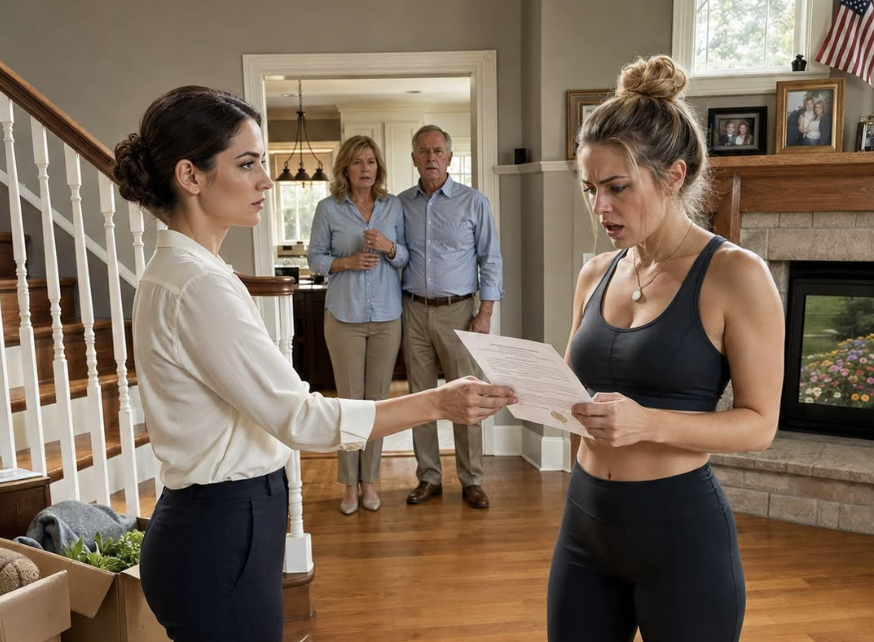
Emily came downstairs around 1:00 in the afternoon. I heard her on the stairs humming a cheerful little tune. She was dressed in expensive athletic wear, her hair in a perfect ponytail, ready to go to a yoga class in the town she now considered hers.
She walked into the living room and froze. The humming stopped.
Her eyes darted around the cavernous empty space where the plush sectional sofa had been. There was now only an indentation in the carpet.
Where the 60-in flat screen TV had sat, there was only a blank wall with a few dust bunnies. Her mouth fell open.
What? What happened? she stammered, looking at me. Were we robbed?
I was still sitting on the bottom stair, calm and composed. I had rehearsed this moment in my head a hundred times.
No, I said simply. We weren’t robbed.
She walked slowly into the center of the room, turning in a circle, her confusion morphing into disbelief. She peaked into the dining room, which was also empty, save for the old rickety chairs my grandfather had built as a temporary set decades ago.
Where is everything? she demanded, her voice rising in panic. The sofa, the dining table, where is my living room set?
My living room set.
The entitlement in those words was breathtaking.
It’s not your living room set, Emily. I said, my voice quiet but firm. It was never yours.
She whipped around to face me, her eyes flashing with anger.
What are you talking about? Mom and dad gave me this house. Everything in it is mine.
Mom and dad gave you a house they didn’t own, I replied, standing up slowly. And they certainly couldn’t give you furniture they didn’t buy.
A flicker of understanding and fear crossed her face.
What did you do? she whispered.
I took what belongs to me, I said. I have the receipts for every single piece of furniture, every appliance that was in this house. I bought them with my money, so I had them moved into a storage unit.
They’re mine.
She stared at me, her face a mask of outrage.
You can’t do that. This is my home. You’re supposed to be packing your things to leave.
My 48 hours aren’t up yet, I said with a small, cold smile. I decided to start with the big stuff.
She started to pace back and forth on the bare floor, her expensive sneakers squeaking with every angry step.
This is insane. You are trying to ruin this for me. You’ve always been jealous of me. Always trying to sabotage my happiness.
The accusation was so ridiculous, so twisted that I almost laughed. Jealous? I had been funding her happiness for years. I had sacrificed my own so she could live her carefree life without a single worry.
Jealous? I asked, my voice dangerously soft. I paid for the car you drove in high school, Emily. I paid for your trip to Europe after graduation. My paychecks covered the rent on your first three apartments when you couldn’t be bothered to keep a job.
The only thing I’m jealous of is your spectacular lack of shame.
She recoiled as if I had slapped her. She was used to being the protected one, the one nobody ever challenged. She didn’t know how to handle this version of me.
Mom and dad will be furious, she shrieked, resorting to her favorite tactic, hiding behind our parents. They are going to kill you when they find out what you’ve done.
Good, I said. I have a few things I’d like to say to them, too.
But here’s the thing, Emily. Their anger doesn’t matter anymore because this house, it’s not theirs to give you.
I walked over to the empty mantelpiece and pulled a folded document from my back pocket. It was a copy of our grandfather’s will.
I held it out to her. You should read this. It’s a real page turner.
She snatched it from my hand and unfolded it. Her eyes scanning the page. I watched as the color drained from her face.
I saw the exact moment she read the claws bequething the house to me. Her expression shifted from righteous anger to pure unadulterated shock.
The smirk she had worn at the dinner table was gone, replaced by a slack jawed horror.
This This can’t be real, she stammered, looking from the paper to me and back again. They told me they said they inherited it.
They lied, I said. They’ve been lying for 10 years. They lied to you and they lied to me.
They let me pay off the mortgage on a house that was already mine and then they tried to give my inheritance to you.
She sank down onto the floor, the will fluttering from her hand. The reality of the situation was finally crashing down on her. The perfect life that had been handed to her on a silver platter was a mirage.
She had no house. She had no furniture. She was just a guest in my home.
So, where am I supposed to live?” she whispered, her voice small and childlike.
It was the first time she had ever sounded vulnerable. I looked down at her at the golden child finally faced with a consequence, and I felt nothing.
No pity, no sympathy, just a cold, hard sense of justice.
Honestly, Emily, I said, turning to walk away. That sounds like a problem you and mom and dad need to figure out because I already paid for your life once. I’m not doing it again.
My parents came home 2 days later. They had been on a little celebratory trip to a nearby bed and breakfast, a victory lap after successfully securing their favorite daughter’s future at the expense of their other one.
I imagined them toasting with champagne, patting themselves on the back for their cleverness. Their arrogance was about to come crashing down.
I wasn’t at the house when they arrived. Hannah had advised me to stay away, to let the legal documents do the talking.
I was at her apartment drinking the best cup of coffee I’d had in years, waiting for the inevitable phone call. The first call came from my mother at 6:15 p.m. I let it go to voicemail.
A minute later, my phone buzzed again. My father. I ignored it.
Then came a string of frantic texts.
Um, Rachel, what is going on at the house? Why is everything gone? Call me now.
Mom, the locks are changed. We can’t get in. Did you do this?
Dad, this is not funny. Rachel, open the door.
Mom, Emily is crying. You are a cruel, selfish girl. I don’t know what we ever did to deserve a daughter like you.
That last one almost made me laugh. I saved a screenshot of it.
Finally, a voicemail appeared from my mother. Her voice was no longer cold and authoritative. It was high-pitched and panicked.
Rachel Elizabeth Morgan, I don’t know what kind of sick game you’re playing, but you had better call me back this instant. We are locked out of our own home. All the furniture is gone. What is going on?
I took a calm sip of my coffee. I didn’t have to say a word.
The process server had already been there. Hannah had arranged it perfectly. He had arrived just 5 minutes after my parents got there as they were still rattling the door knob and peering through the windows.
He had walked up the driveway, confirmed their names, and handed them the legal summons. Taped to the front door, right next to the brand new deadbolt was a notice of petition, a large official looking document for all the world and all the neighbors to see.
The document legally informed them that a petition had been filed with the county court to enforce the last will and testament of my grandfather. It stated that I, Rachel Morgan, was the rightful owner of the property.
It named the quit claim deed they had signed as a fraudulent document and declared their attempted transfer of the property to Emily null and void. Finally, it served as a restraining order, forbidding them from entering the property or harassing me in any way.
The public humiliation was the point. For years, they had cultivated an image of a perfect, respectable family. That image was now shattered.
Mrs. Gable from next door was probably watching the entire drama unfold from her living room window, and I couldn’t find it in me to be embarrassed. I was relieved. The truth was finally out.
My father was the one to call next. When I answered, his voice was a low growl.
What is the meaning of this, Rachel? A lawsuit? You’re suing your own parents?
You should talk to my lawyer, I said calmly, using the most powerful six words I had ever spoken.
I am talking to my daughter, he boomed. You listen to me. You are going to drop this nonsense right now and you are going to give us back our keys.
They’re not your keys, Dad. I said, my voice as cold as ice, and it’s not your house. It never was. It’s mine. Granddad left it to me.
There was a stunned silence on the other end of the line. He hadn’t thought I would ever find out. He had underestimated me his entire life, and he was still doing it.
How? How did you know? he stammered.
It doesn’t matter how I know, I said. The only thing that matters is that the lies are over. You have no power here anymore. You have no right to this property.
If you set foot on that lawn again, I will call the police and have you arrested for trespassing.
Rachel, please.
His voice changed, shifting from anger to a desperate, wheezing plea.
You don’t understand. We were just trying to help Emily. She needed a fresh start. We can work this out. We’re family.
Family.
The word was a joke coming from his lips.
You stopped being my family the moment you decided to steal my inheritance. I said, “Goodbye, Dad.”
I hung up the phone and blocked his number. Then I blocked my mother’s. Then I blocked Emily’s.
The silence that followed was beautiful.
The fallout was swift and brutal. My parents had to hire a lawyer they couldn’t afford. Their friends and relatives in the community heard the story.
Not my version, but the one the court documents told, which was far more damning. They were exposed as frauds who had exploited one daughter to benefit the other. Their reputation was in tatters.
Emily, with no house and no furniture, had to fly back to California with her tail between her legs. Her fantasy of a new life completely destroyed.
My parents had to find a small apartment to rent on the other side of town. For the first time in their lives, they were forced to stand on their own two feet.
It turned out they weren’t very steady.
I never gloated. I never shouted. I let the law, the truth, and their own actions do the work for them.
Their downfall was quiet, methodical, and entirely of their own making. I had simply stopped holding them up, and they had collapsed under the weight of their own deceit.
A week later, I walked back into the house. It was truly mine now, not just legally, but emotionally.
The silence that greeted me was no longer echoing with loss. It was filled with possibility. It was a blank canvas.
The first thing I did was hire a cleaning crew to scrub the entire place from top to bottom. I wanted to wash away every last trace of their presence, of their betrayal. I wanted to erase the memory of my mother’s coldness in the kitchen and my father’s cowardice in the living room.
Then I started to rebuild. I didn’t bring my old furniture back from the storage unit. That furniture was part of my old life. The life where I was Rachel the caretaker, Rachel the doormat.
I sold all of it and used the money to buy new things that were entirely my own, chosen by me for me.
I bought a comfortable sofa in a bright, cheerful yellow. I bought a small round dining table, perfect for one or two people, not for a family of ghosts.
The most important act of reclamation was painting the walls. I painted over the drab beige my mother had insisted on for years.
The living room became a soft, calming blue. The kitchen became a warm, sunny cream. My bedroom, the room where I had cried myself to sleep, became a tranquil shade of lavender.
With every brushstroke, I felt like I was reclaiming my territory, painting over the past and creating a future that belonged only to me.
I worked in the garden, not out of duty, but out of love. I pruned the roses my grandfather had planted, feeling his presence with me, a quiet, reassuring strength.
I planted new flowers, bright patches of color that made me smile every time I looked out the window. This wasn’t a chore anymore. It was a joy.
My piece, however, required one final painful step. I knew I had to cut them off. It wasn’t a decision I made out of anger or a desire for revenge. It was a matter of survival.
They were a poison in my life and the only way to heal was to remove the source of the infection.
I wrote them one last letter. I didn’t yell. I didn’t accuse. I just stated the facts.
You lied to me for 10 years. I wrote, “You knowingly stole my inheritance and exploited my love for this family and this house. You did not do this by accident. It was a deliberate, calculated series of choices.
Because of those choices, I can no longer have you in my life. This is not a punishment. This is a boundary. I need to protect my peace. And my peace is not possible with you in my life.
I wish you no ill will, but I also wish for no contact. The house is mine, just as granddad wanted. I will honor his memory by making it the happy, safe home he always intended it to be.
Goodbye.
I sent it to their new rental address without a return address. I knew it wouldn’t bring me an apology.
They were incapable of that kind of self-reflection. It was for me. It was the final word. The closing of a chapter that had gone on for far too long.
Some of the neighbors were curious. Mrs. Gable asked me one day when I was out getting the mail.
“Is everything all right with your folks, dear?” she asked, her eyes kind.
I gave her a small, genuine smile.
“Everything is exactly as it should be,” I said. “The house is mine, just like my grandfather wanted.”
She just nodded, a look of understanding on her face. That was all that needed to be said.
I settled into a new rhythm of life, a quiet, peaceful existence. I had friends over for dinner. I read books on my new yellow sofa. I adopted a little rescue dog who followed me from room to room.
I found joy in the simple things. The way the morning sun hit the newly painted kitchen walls. The sound of my dog snoring at the foot of my bed. The profound unshakable feeling of being safe in my own home.
I was no longer a caretaker, a savior, or a victim. I was just Rachel.
And for the first time in a very long time, that was more than enough.
I’m standing in my garden now, looking at the roses my grandfather planted. For years, I took care of them out of a sense of duty. A desperate need to hold on to a piece of him, to keep something beautiful alive in a house that was quietly suffocating me.
Now I tend to them for myself, because their beauty brings me peace.
They thought I’d pack my bags and leave in 48 hours. They counted on me being the good, quiet daughter I had always been. They thought my love for them was unconditional, that I would swallow any amount of pain to keep the family together.
But they were wrong. They pushed me too far.
And in the wreckage of their betrayal, I didn’t find despair. I found my strength. I found it in silence, in truth, and in the revolutionary act of choosing myself.
Sometimes the best revenge isn’t a loud, fiery explosion. It’s not about destruction. It’s the quiet, steady work of rebuilding your own life on your own terms. It’s finding peace where there was once chaos.
I look at this house now, my house, and I see more than just bricks and mortar. I see a testament to my own resilience. I survived. I healed.
And I am finally, finally home.
Tell me in the comments, have you ever been betrayed by your own family? And don’t forget to like, subscribe, and share. Because stories like this, they’re more real than you think.
If you came here from Facebook because of Rachel’s story, please go back to the Facebook post, tap Like, and leave exactly “Well told” in the comments to support the storyteller. That small action means more than you might think, and it gives the writer real encouragement to keep bringing you more stories like this.